Aries
A push into something new: initiative, risk, independence, the urge to begin.
Astrology becomes readable the moment it stops being a pile of sign cliches and starts behaving like character study. The signs give temperament, the elements give texture, the modalities give motion, and the big three make the chart feel inhabited.
This guide keeps that sequence intact. You begin with the zodiac table, then learn how elements and modalities change the tone, and only then move into the Sun, Moon, and Rising signs that make the chart personal.
Signs
Each sign is less a label than a style of response.
Elements
Fire, Earth, Air, and Water change the texture of the sign.
Big Three
Sun, Moon, and Rising turn the chart from general into someone recognizably human.
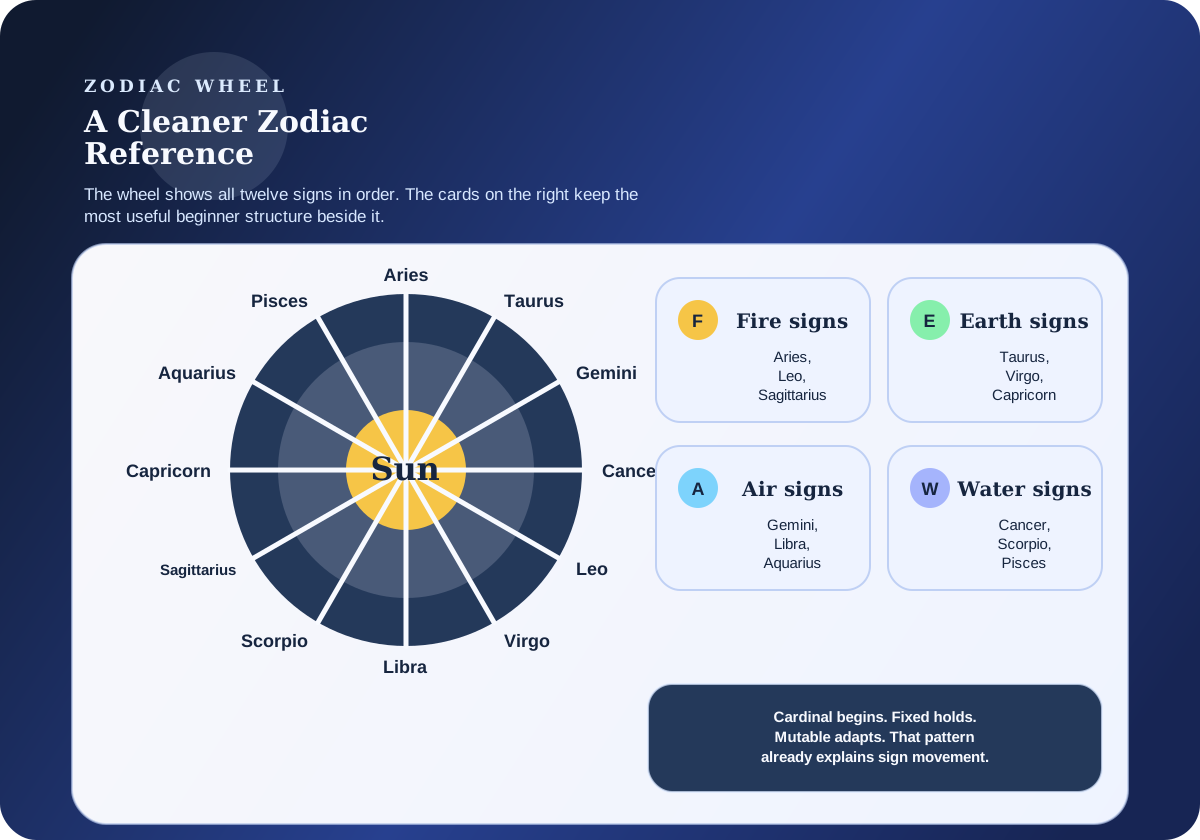
1. What The Zodiac Is
In Western astrology, the zodiac divides the sky into twelve signs of equal size. Each sign carries an element, a modality, and a ruling planet. That structure is what gives astrology its vocabulary. Aries is not just a date range. It is fire, cardinal motion, and a Mars-ruled style of initiative. Taurus is earth, fixed form, and a Venusian way of settling, valuing, and preserving.
Historically, zodiac systems developed out of older sky-watching traditions. In modern life, most people meet astrology through Sun-sign culture first. That is a useful doorway, but it is only the doorway. The fuller chart adds the Moon, Rising sign, house structure, planets, and aspects, which is why two people with the same Sun sign can feel nothing alike.
It is also worth saying plainly that astrology is a symbolic tradition, not a scientific measurement system. People use it for reflection, storytelling, timing, and pattern-making. Read that way, it becomes a language of emphasis rather than a machine for absolute truth.
A sign is not a verdict. It is a style of energy, and style only becomes interesting once several layers are speaking at the same time.
2. Zodiac Sign Table
This table uses the common popular date ranges together with the sign's element, modality, and its traditional ruler. For Scorpio, Aquarius, and Pisces, the modern co-rulers are included because many contemporary readers use them.
| Sign | Date range | Element | Mode | Ruler | Core idea |
|---|---|---|---|---|---|
| Aries | Mar 21 - Apr 19 | Fire | Cardinal | Mars | Initiates quickly and directly |
| Taurus | Apr 20 - May 20 | Earth | Fixed | Venus | Builds stability, value, and comfort |
| Gemini | May 21 - Jun 20 | Air | Mutable | Mercury | Connects through ideas and language |
| Cancer | Jun 21 - Jul 22 | Water | Cardinal | Moon | Protects, nurtures, and remembers |
| Leo | Jul 23 - Aug 22 | Fire | Fixed | Sun | Creates, radiates, and wants to be seen |
| Virgo | Aug 23 - Sep 22 | Earth | Mutable | Mercury | Refines, edits, and improves |
| Libra | Sep 23 - Oct 22 | Air | Cardinal | Venus | Balances, relates, and negotiates |
| Scorpio | Oct 23 - Nov 21 | Water | Fixed | Mars / Pluto | Intensifies, investigates, transforms |
| Sagittarius | Nov 22 - Dec 21 | Fire | Mutable | Jupiter | Explores, expands, and looks outward |
| Capricorn | Dec 22 - Jan 19 | Earth | Cardinal | Saturn | Structures, commits, and endures |
| Aquarius | Jan 20 - Feb 18 | Air | Fixed | Saturn / Uranus | Questions norms and thinks systemically |
| Pisces | Feb 19 - Mar 20 | Water | Mutable | Jupiter / Neptune | Feels, imagines, dissolves boundaries |
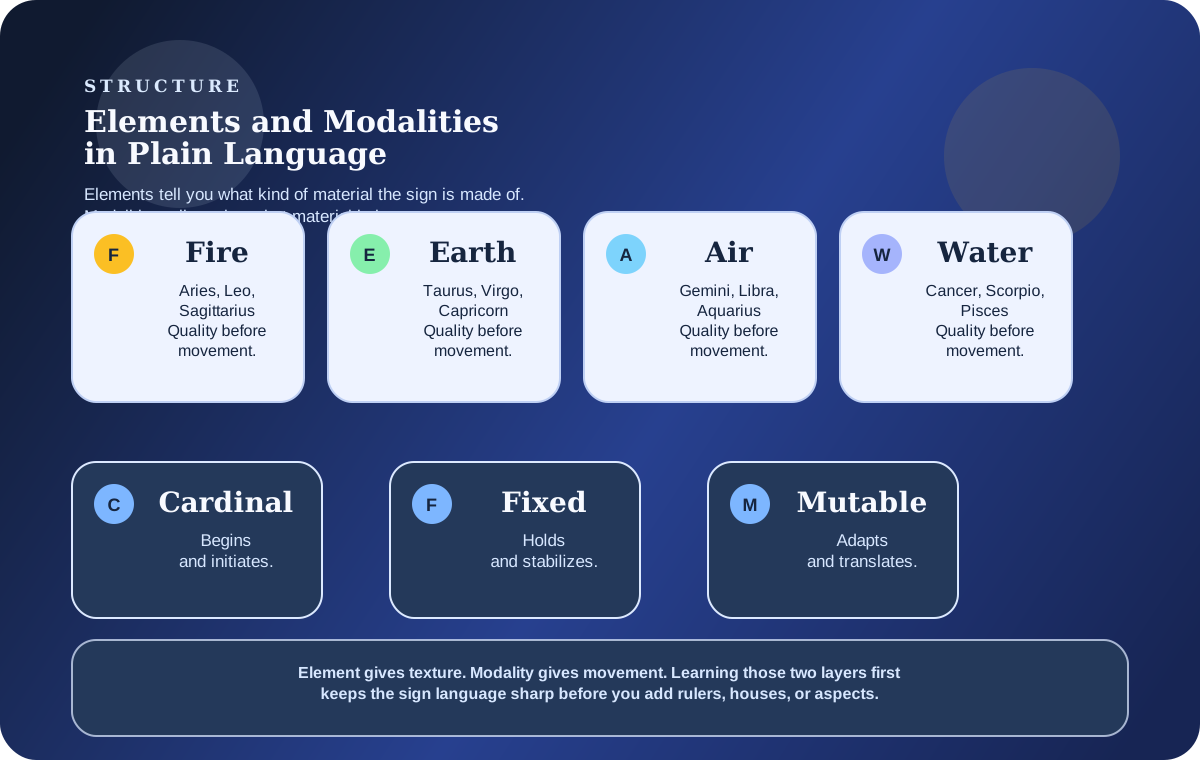
3. Elements And Modalities
Elements answer the question, "What kind of material is this sign made of?" Fire tends to be hot, visible, direct, and energizing. Earth tends to be practical, concrete, and form-building. Air is mental, verbal, and relational. Water is feeling-based, intuitive, protective, and absorptive.
Modalities answer a different question: "How does this sign behave inside the season?" Cardinal signs begin and initiate. Fixed signs hold the center and stabilize. Mutable signs adapt, translate, and bridge the ending of one phase into the beginning of the next.
Once you learn those two layers, signs stop feeling like twelve disconnected personality labels. You can immediately see why Aries and Cancer are both cardinal signs even though one is fire and the other is water, or why Virgo and Sagittarius share mutability even though one is earth and the other is fire. The chart starts to sound designed instead of random.
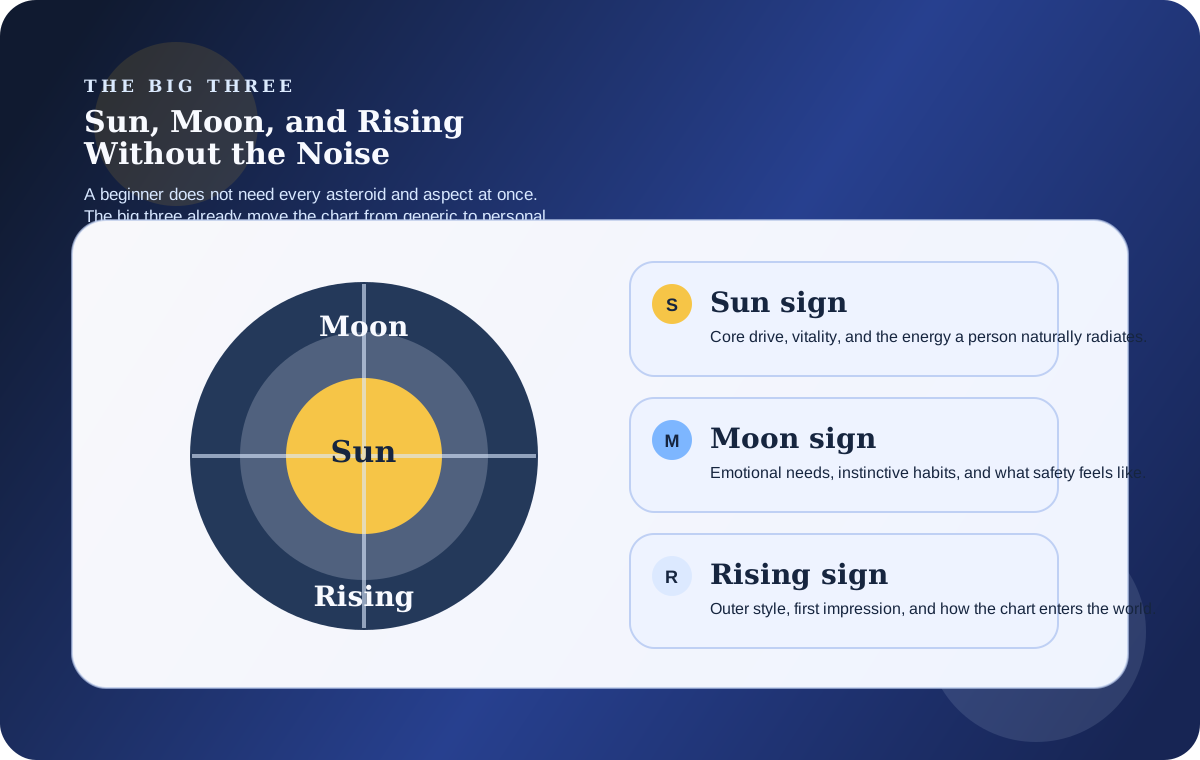
4. Sun, Moon, Rising
The Sun sign speaks to core vitality, identity, will, and the kind of energy a person naturally radiates. It is the most culturally visible layer of astrology. The Moon sign describes emotional needs, instinctive habits, and how someone processes security, attachment, and mood.
The Rising sign, also called the Ascendant, shows how a person enters the world: their tone, style, first impression, and instinctive approach to new situations. In practice, many people feel their Rising sign most strongly in outer behavior and their Moon sign most strongly in private life.
Put together, the big three often produce a much richer description than the Sun sign alone. Someone with a fiery Sun may still appear reserved because of an earth or Saturnian Rising sign. A calm outer manner may hide a very intense Moon. The chart becomes human the moment those layers are allowed to coexist instead of competing for one simple label.
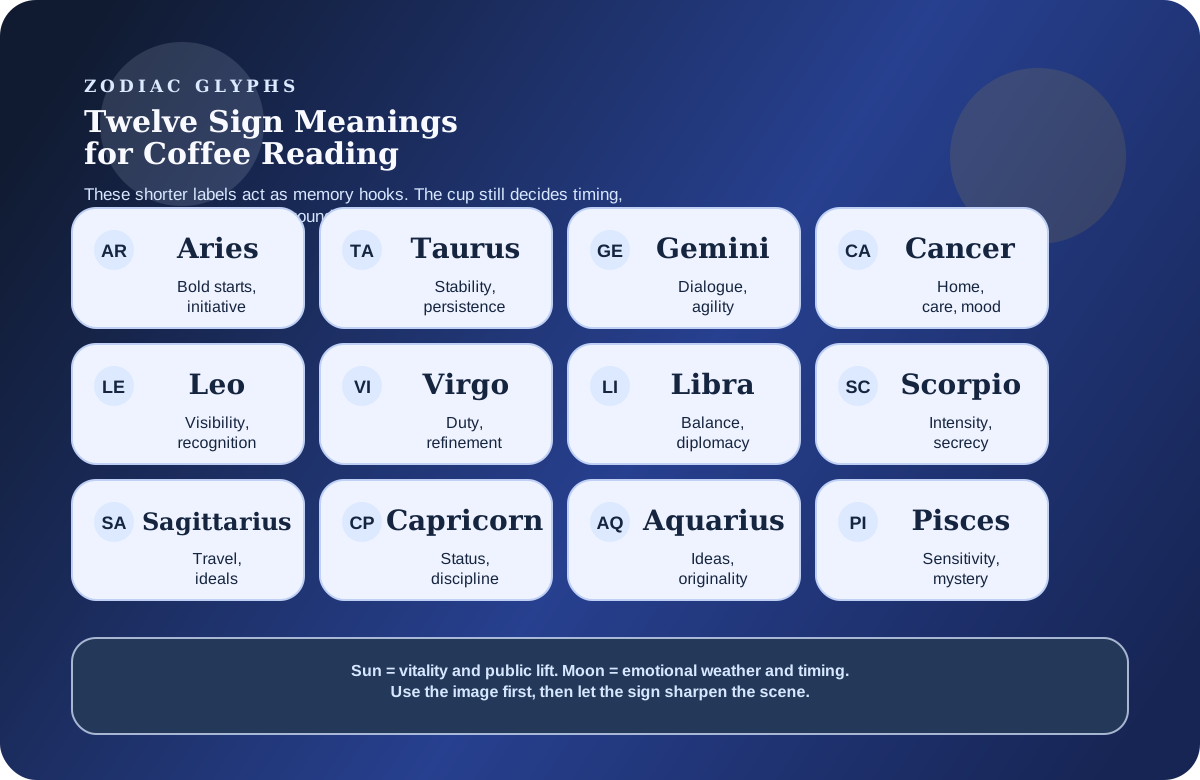
5. Zodiac Glyphs In Coffee Reading
One of the most practical parts of T. A. Radchenko's coffee manual is the chapter on zodiac symbols. The logic is simple: astrologers already draw the signs as compact glyphs, so when similar marks appear in coffee grounds they can be read more confidently than ambiguous blotches.
The rule is useful. If the glyph lies deep near the base, read the sign by its core quality. If it appears in the middle or upper cup, let the sector adjust the meaning: work, relationships, family, social circle, or near-term events. Away from the base, some readers also use the sign as a time pointer, especially when the rest of the cup already supports a seasonal or monthly window.
The same chapter extends this logic to the Sun and Moon symbols. The Sun amplifies vitality, visibility, success, and status. The Moon describes emotional weather, memory, and instinctive response. A waxing Moon can speed favorable developments, a waning Moon can mark slowdowns or separation, and a full Moon often opens warmth, desire, and social abundance.
This is where astrology becomes especially useful for coffee reading: the sign does not replace the image, it sharpens the image.
A push into something new: initiative, risk, independence, the urge to begin.
Stability, persistence, material grounding, and the desire to make life secure and useful.
Conversation, mediation, paperwork, fast thinking, and the linking of separate threads.
Family feeling, care, imagination, home atmosphere, and emotional sensitivity.
Visibility, pride, recognition, generosity, and the wish to be seen and valued.
Duty, refinement, usefulness, practical service, and a serious eye for what needs fixing.
Balance, diplomacy, contested choices, mutuality, and the effort to keep life even.
Intensity, secrecy, jealousy, emotional pressure, and the need to master strong feelings.
Travel, ideals, enthusiasm, broadening horizons, and the wish to move outward.
Responsibility, status, discipline, future-building, and a seriousness about results.
Ideas, intuition, originality, recognition, and a freer relationship to social rules.
Sensitivity, mystery, emotional immersion, compassion, and fascination with what is hidden.
That overlap is what makes astrology useful beyond natal charts. The same sign language that explains temperament in a birth chart can also color a coffee reading, especially when the cup already suggests movement, timing, and emotional tone. For the full ritual context, see the coffee cup reading manual.
6. Planetary Markers In Coffee Reading
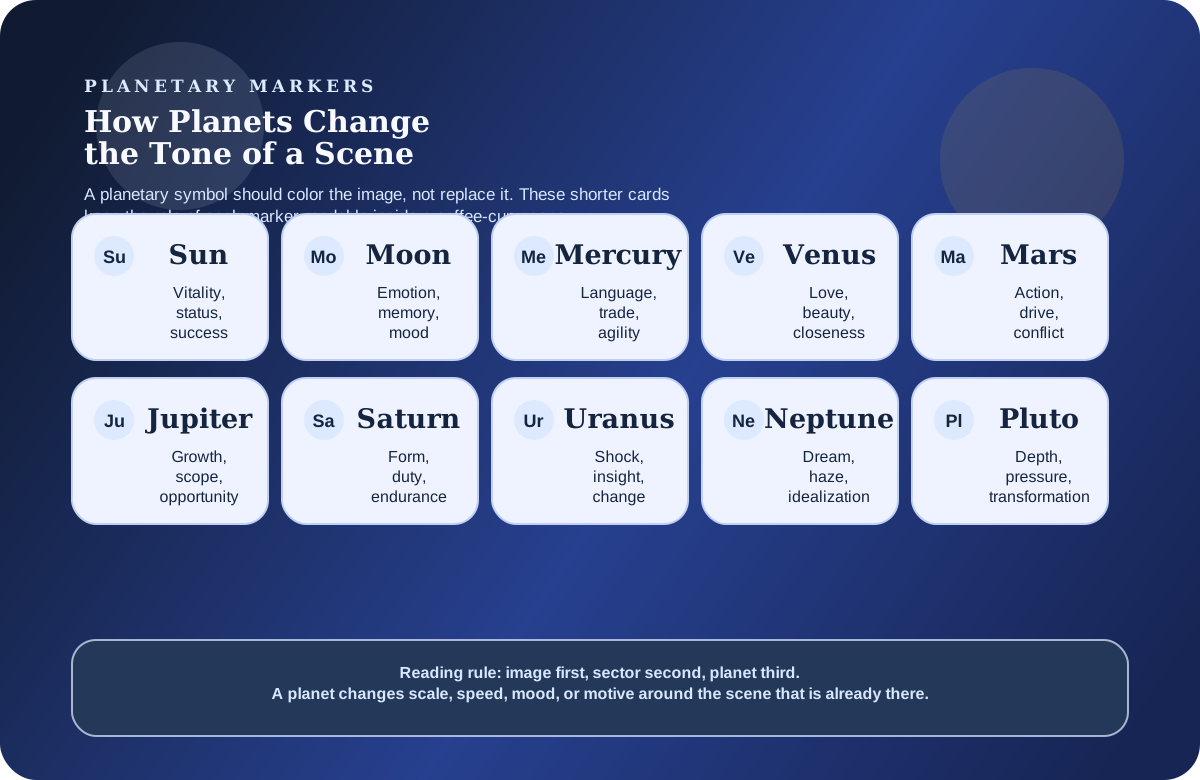
The same chapter in Radchenko's manual that treats zodiac glyphs also expands into planet signs. The most usable takeaway is that planets behave less like separate predictions and more like modifiers. They change scale, speed, tone, or motive. A bright Sun can enlarge success. A Moon can make the scene emotional or cyclical. Mercury can turn it toward negotiation, paperwork, or trade.
The book reads Venus as closeness, beauty, sympathy, and the need for affection; Mars as action, drive, courage, and conflict; Jupiter as expansion, confidence, wisdom, and opportunity; and Saturn as form, responsibility, boundaries, and earned respect. The outer-planet symbols are treated more psychologically: Uranus for sudden intuition and disruption, Neptune for dream, haze, and idealization, and Pluto for deep transformation and raw pressure.
This is the point where astrology becomes practically useful inside tasseography. It stops being decorative symbolism and starts acting like a reading tool: one more layer of precision for a mark that already has shape, sector, and timing.
7. How To Read A Chart Simply
This order is simple, but it works because it mirrors how people actually understand one another: first the visible style, then the underlying emotional pattern, then the motive force that keeps recurring in the person's choices. Read that way, astrology begins to feel more like character study than classification.
8. How To Use The Guide Well
The weakest astrology takes one keyword and treats it like fate. The strongest astrology treats the chart as a pattern of tensions: element against element, mode against mode, the Sun's will against the Moon's need, the outer Rising sign against the private emotional life. That layered view is what keeps the reading intelligent.
That is why a good beginner's guide should not drown the reader in jargon. It should teach the architecture first: sign, element, modality, ruler, then the big three. Once that frame is solid, the chart begins to sound less like a stereotype and more like a person with contradictions, preferences, timing, and style.
The coffee-reading layer does not change that rule. Zodiac glyphs, Sun, and Moon markers are most useful when they confirm what the rest of the scene is already saying. Astrology strengthens a reading when it clarifies, not when it overwhelms.
Astrology is a symbolic tradition for reflection and entertainment, not a substitute for legal, medical, or financial advice.
Continue In CoffeeTells
CoffeeTells lets you move from a coffee reading into astrology automatically, so you can keep the symbolic thread together instead of switching between tables, notes, and separate tools.
Try Astrology in CoffeeTells