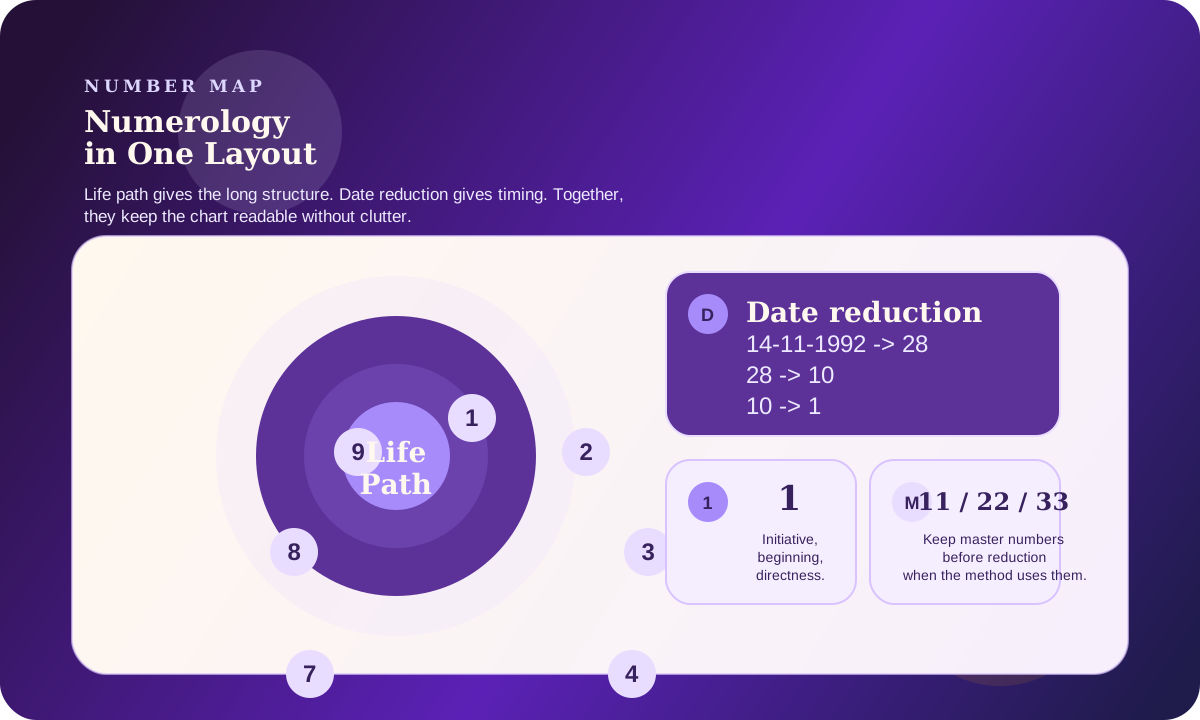
1: initiative
Independent, direct, starting energy. Its shadow is impatience or the urge to force outcomes.
At first glance numerology looks mechanical: add digits, reduce totals, name the result. But its appeal has never been arithmetic alone. Its appeal is that a date can begin to read like temperament, rhythm, pressure, and timing.
This guide keeps the method clean and the language human. It starts with calculation, then moves through the numbers as living themes, and only after that adds master numbers and dates as deeper layers of the story.
Method
Do the arithmetic carefully once, and the chart becomes easier to trust.
Vocabulary
Each number carries a gift, a tension, and a lesson in timing.
Context
Different schools vary; clarity starts by naming the method you use.
1. What Numerology Is
Human beings have treated numbers as meaningful for a very long time. Ancient mathematics, religious cosmologies, and philosophical schools all gave numbers more than a counting role. Modern numerology takes that older instinct and turns it into a chart language, especially through the life path number, master numbers, and date reduction.
What keeps the system alive is not mystique alone. It is recognizability. People see a date reduced to a number and suddenly find language for the very pattern they keep repeating: pushing forward, holding back, caretaking too much, changing too fast, or trying to build something that will last.
Modern chart systems are not perfectly unified. Some teachers reduce numbers differently. Some preserve master numbers more often than others. The useful move is not to pretend there is one universal rulebook. The useful move is to learn the method you are using and stay faithful to it long enough for the chart to become readable.
A strong numerology reading does not trap a person inside a number. It gives language to the pattern they keep living.
2. How To Calculate A Life Path
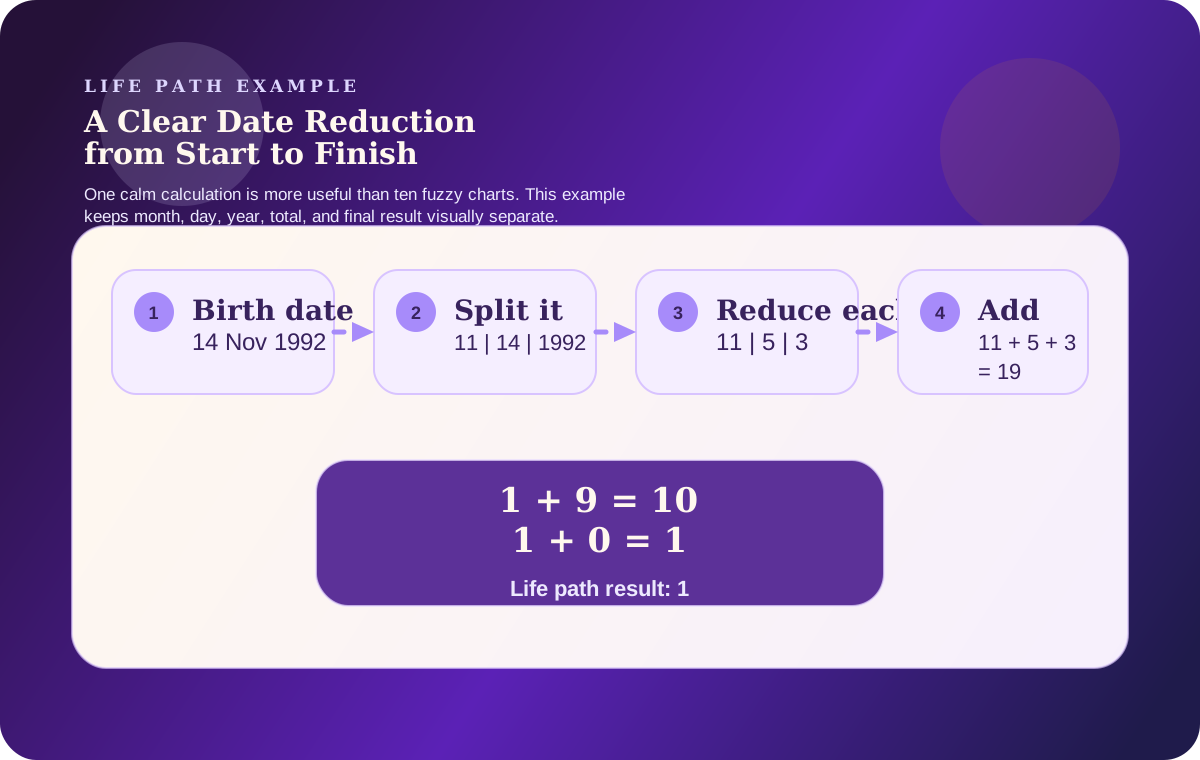
The life path number is usually calculated from the full birth date. One common method is to reduce the month, day, and year separately, preserve 11, 22, and 33 if they appear, then add the three results together and reduce again.
You will also see another method online: adding every digit from the full birth date in one line and reducing only at the end. Both methods exist. The important thing is to name the method first so the reading stays internally consistent and the numbers do not shift under your feet.
3. The Meanings Of 1 To 9
The simplest way to remember the number meanings is to treat them like a sequence of human tasks. One begins. Two relates. Three expresses. Four builds. Five moves. Six cares. Seven investigates. Eight achieves. Nine completes. That sequence is not the whole system, but it gives the chart a natural rhythm and keeps the meanings from turning into a pile of disconnected keywords.
Independent, direct, starting energy. Its shadow is impatience or the urge to force outcomes.
Sensitivity, cooperation, listening, and balance. Its shadow is hesitation or over-accommodation.
Creativity, communication, play, and visibility. Its shadow is scattered attention or excess drama.
Discipline, method, habit, and long-building work. Its shadow is rigidity or overwork.
Freedom, experiment, travel, and change. Its shadow is restlessness or inconsistency.
Responsibility, loyalty, family, beauty, and repair. Its shadow is control or emotional over-duty.
Study, introspection, analysis, and spiritual or intellectual depth. Its shadow is distance or overthinking.
Execution, leadership, material strategy, and ambition. Its shadow is hardness or imbalance.
Compassion, release, broad vision, and endings that make room for the next cycle. Its shadow is emotional overload.
Seen this way, the chart begins to feel less like a verdict and more like a progression. People rarely express only one number cleanly. They move between initiation and care, freedom and structure, power and release. The vocabulary is useful precisely because life is mixed.
4. Master Numbers 11, 22, 33
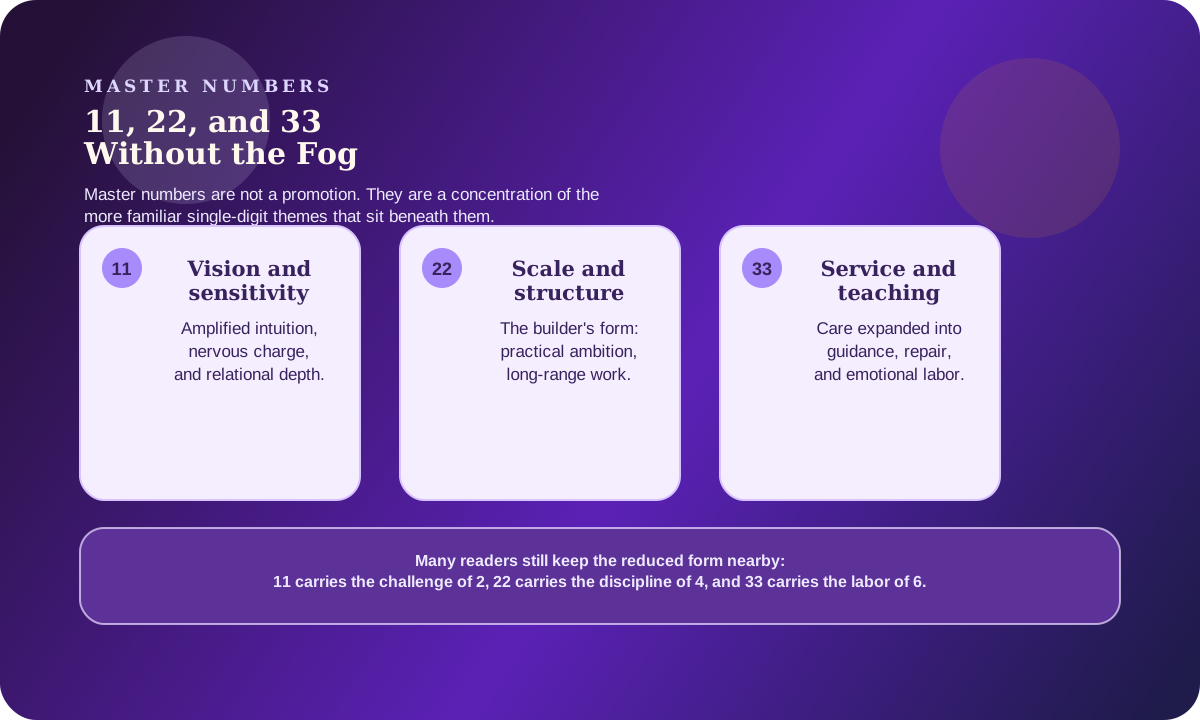
In many modern numerology guides, the master numbers do not replace the single-digit system. They intensify it. Eleven deepens the relational sensitivity of 2 with more vision and nervous charge. Twenty-two deepens the structure of 4 by adding scale, practical ambition, and long-range building. Thirty-three deepens the care of 6 by emphasizing teaching, service, or healing.
People often make one mistake with master numbers: they assume "master" means "better." It does not. It usually means more concentrated, more demanding, and harder to carry well. A master number can describe remarkable focus, but it can also describe pressure, sensitivity, or responsibility that feels difficult to hold.
This is why some readers interpret a master number alongside its reduced form instead of choosing only one. Eleven still contains the challenge of 2. Twenty-two still needs the discipline of 4. Thirty-three still has to manage the emotional labor of 6.
5. How Dates Are Often Read
When numerologists read a date on the calendar, they often add its digits to get the tone of the day. A date that reduces to 1 can be read as direct, initiating, and good for a first move. A 2 day may feel more cooperative. A 4 day can favor structure and planning. A 5 day often gets associated with movement, change, or surprises.
In popular modern numerology, repeating numbers are also used as shorthand prompts. The meanings are usually kept broad: 111 for initiative, 222 for balance, 333 for expression, 444 for structure, 555 for change, 666 for care and responsibility, 777 for reflection, 888 for power or material focus, and 999 for closure. Used lightly, they act like quick annotations in the margin, not like a complete chart.
6. Number Omens In Coffee Reading
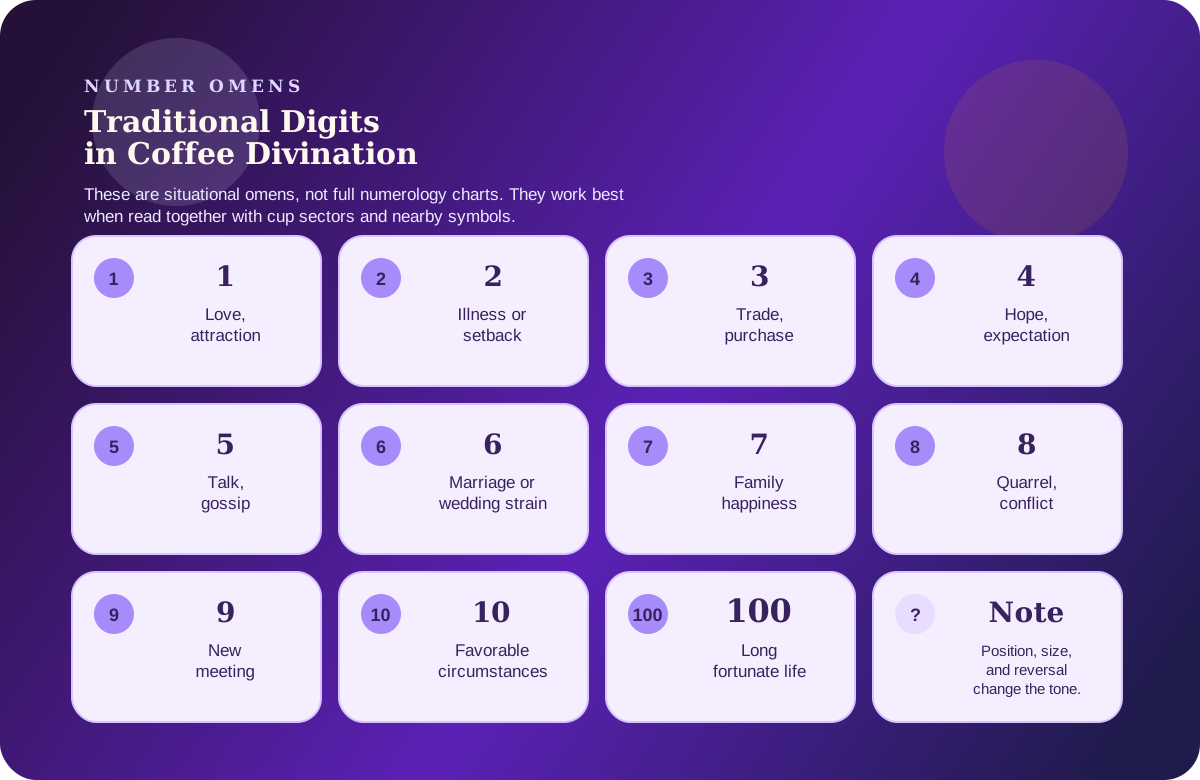
Modern numerology asks what a number says about a life pattern. Traditional coffee and tea manuals often use the same digits more concretely, as event-signals. T. A. Radchenko's 2007 guide is a clear example: 1 points to love, 2 to illness or setback, 3 to trade or purchase, 4 to hope, 5 to talk and gossip, 6 to marriage or wedding trouble, 7 to family happiness, 8 to quarrel, 9 to a new acquaintance, 10 to favorable circumstances, and 100 to a long fortunate life.
The logic is different from life-path numerology but the emotional territory is familiar. Numbers still describe the same human pressures: love, health, money, conflict, commitment, reunion, and luck. What changes is the scale. A life-path number speaks structurally; an omen-number speaks situationally.
That bridge between systems is one reason numerology fits naturally beside coffee cup reading manual. The chart gives enduring tendencies; the omen gives the mood of the moment.
7. How Number Layers Differ
One reason numerology turns confusing online is that four different practices are often mixed into one voice. A life-path number is not the same thing as a date reduction. A repeating digit sequence is not the same thing as a coffee-cup omen. They overlap in tone, but they serve different jobs in an interpretation.
| Reading layer | What it describes | Best use |
|---|---|---|
| Life path | The long structural tone of a life: initiative, care, power, introspection, completion, and so on. | Start here when you want the backbone of the chart. |
| Calendar date | The mood of a specific day, launch, trip, meeting, or decision point. | Use for timing, atmosphere, and short-range planning. |
| Repeating digits | A compact symbolic echo: the feeling of emphasis, repetition, or a pattern asking for attention. | Use as a light prompt, never as a full reading by itself. |
| Coffee-cup number omen | A situational sign inside divination: love, setback, gossip, quarrel, marriage, luck, or a new encounter. | Use inside a tasseography scene, alongside sectors and nearby symbols. |
Keeping those layers distinct makes the whole symbolic system feel cleaner. It also lets the manuals talk to one another without collapsing into a single, vague mysticism. The chart tells you what kind of person or phase you are looking at. The omen tells you what kind of moment has surfaced.
8. How To Use The System Well
A strong numerology interpretation should make a person feel seen, not trapped. The number should point to tendencies, pressure points, and strengths, not to a prison sentence. The whole purpose of the chart is to notice where energy naturally wants to begin, connect, build, explore, care, or conclude.
That is also why the simplest charts often work best. Start with the life path. Learn the core number meanings. Add master numbers if they are present. Then use dates as a lighter layer of timing or emphasis. In that order, the chart stays readable and starts sounding less like code and more like a life.
If you borrow number-omens from tasseography, keep the distinction clear: chart numbers describe the architecture of a person or period; omen numbers describe a passing event-tone. Used together, they enrich one another instead of competing.
Numerology is a symbolic tradition for reflection and entertainment, not a substitute for legal, medical, or financial advice.
Continue In CoffeeTells
CoffeeTells lets you move from coffee reading into numerology without building the chart by hand. The app keeps the symbolic flow in one place and turns the method into something fast, readable, and easy to revisit.
Try Numerology in CoffeeTells