Coffee Reading Manual

How to Read a Coffee Cup Like a Living Story

A memorable coffee reading does not begin with a frantic hunt for symbols. It begins with the pause after the last sip, the first dark streak on porcelain, and the quiet question every good reader asks: what is already taking shape here?

Traditional tasseography manuals gave readers a dependable vocabulary. Real coffee-table practice gave that vocabulary warmth, intuition, and conversation. This guide keeps both: the structure of a manual and the atmosphere of a lived ritual.

Ritual

The silence after the last sip is part of the reading.

Placement

A sign near the rim speaks of what is close; at the base it speaks of roots.

Story

The cup becomes convincing when symbols connect into one unfolding scene.

Written like a chapter, not a checklist Traditional meanings in living context Made to be read slowly
Illustrated chart of common coffee reading symbols
The classic symbol list is useful, but it only becomes meaningful after you understand where the marks appear in the cup and how they relate to one another.

1. What Coffee Reading Is

Before the symbols, there is the hush of the cup

Coffee cup reading belongs to the wider family of tasseography, yet in practice it feels far less like consulting a cold system than entering a small, familiar room. The cup is intimate. The ritual is intimate. The reading often happens between two people who are already speaking more honestly than they planned to.

That intimacy is part of why the method survived. The drink is finished slowly. The cup is turned onto the saucer and left for a quiet minute while the grounds settle into streaks, islands, knots, and openings. Older books preserved the symbol vocabulary. Living Turkish and Balkan practice preserved the tone: observant, social, intuitive, and often gently dramatic.

The real craft is not merely spotting a bird or a ring. The real craft is seeing how the cup arranges nearness and distance, promise and hesitation, pressure and release. Once the reader learns to notice that architecture, the symbols stop looking like random stains and start behaving like a scene with its own logic.

The first task of the reader is not to predict. It is to notice what the cup is already emphasizing.

2. How To Read The Cup

The cup reads better when the setup is calm and deliberate

One of the clearest Eastern European manuals on the subject, T. A. Radchenko's Fortune Telling on Coffee and Tea (2007), is very specific about preparation. Use a rounded cup with a light, undecorated interior, choose a fine grind so the residue holds its shape, and let the person drink coffee the way they actually enjoy it. The goal is not theatrics. The goal is contrast, settled grounds, and a relaxed mind.

  1. 1. Read the weather of the cup. Before chasing details, ask whether the cup feels open or crowded, light or heavy, calm or turbulent.
  2. 2. Find the marks with authority. Large, clear figures usually anchor the reading. Tiny flecks matter more after the main shapes have claimed their place.
  3. 3. Ask where each sign lives. The rim, middle wall, handle side, and base often change timing and emphasis.
  4. 4. Let nearby symbols speak to one another. A bird by a road may suggest news connected to movement. A key beside a mountain can hint at a solution hidden inside a difficult situation.
  5. 5. Say the reading as one living sentence. The strongest readings sound like a short story, not like a list of unrelated nouns.

If you rush this order, the cup flattens into random marks. If you keep the order, even a simple cup begins to sound composed and strangely precise.

Traditional practice also distinguishes the saucer from the cup itself. Marks that spill onto the saucer are often treated as past events or older influences still shaping the present, while the inside wall of the cup carries the active reading.

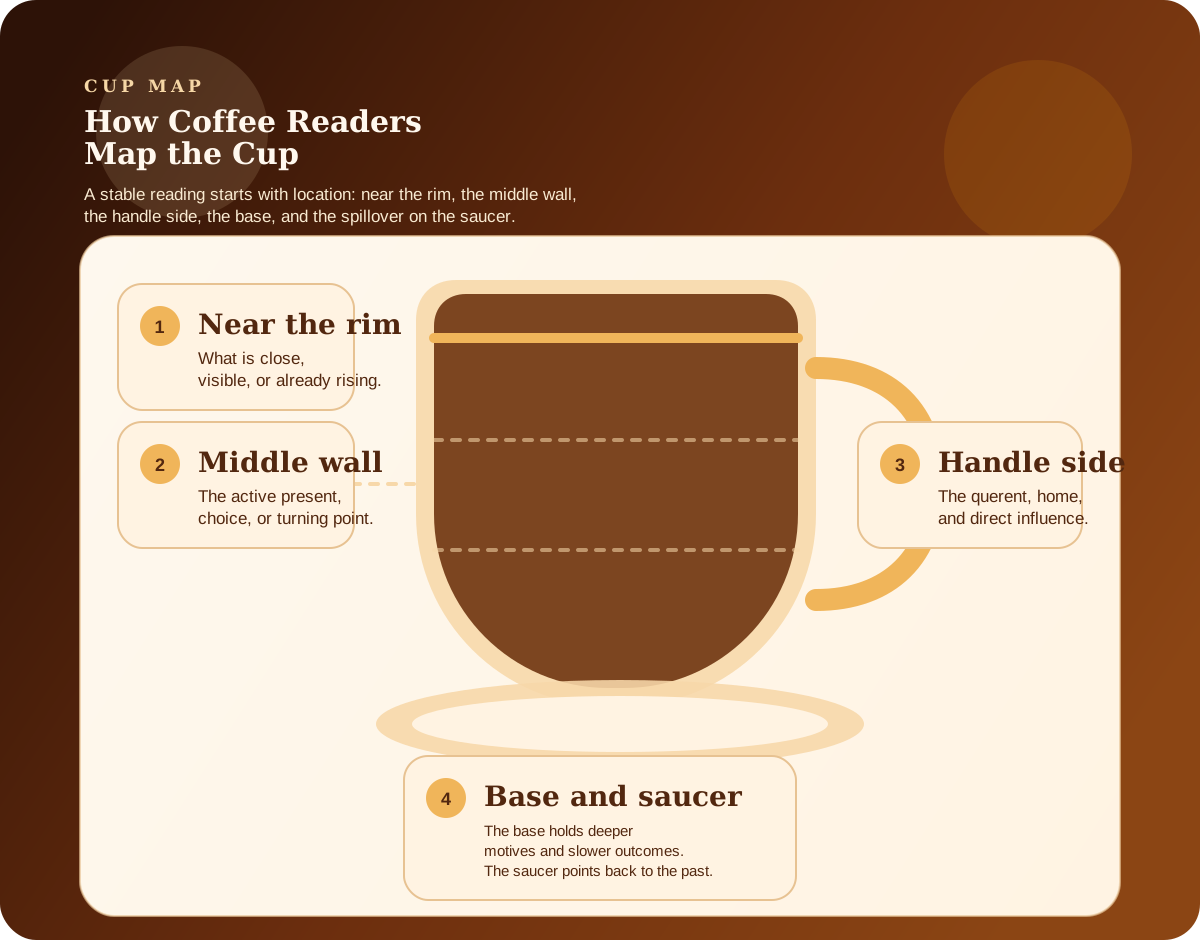
Diagram showing top, middle, bottom, and handle side of a coffee cup
Position is half the reading. If you remember only one structural rule, remember this one.

3. Cup Zones And Timing

The cup can be read by place, by time, and by the kind of question you asked

In many traditional readings, the rim is the nearest layer of the story. Symbols that sit high in the cup often feel immediate, already forming, or already visible in the querent's life. The middle wall is where the living present gathers: the relationship pattern, the choice, the tension, or the turning point unfolding now.

The base tends to hold what is slower, older, heavier, or more deeply rooted. Readers describe the bottom as the place where motives, fears, private attachments, and long timelines collect. The handle side is linked with the person holding the cup, their home, or the part of the story they can influence directly.

Cup area How it is often read
Near the rim What is approaching quickly, already visible, or emotionally close at hand.
Middle wall The active present, where the strongest current theme is playing out.
Handle side The querent, home life, or the part of the story closest to personal action.
Bottom Deeper causes, slower outcomes, buried feelings, and whatever matters most in the heart.

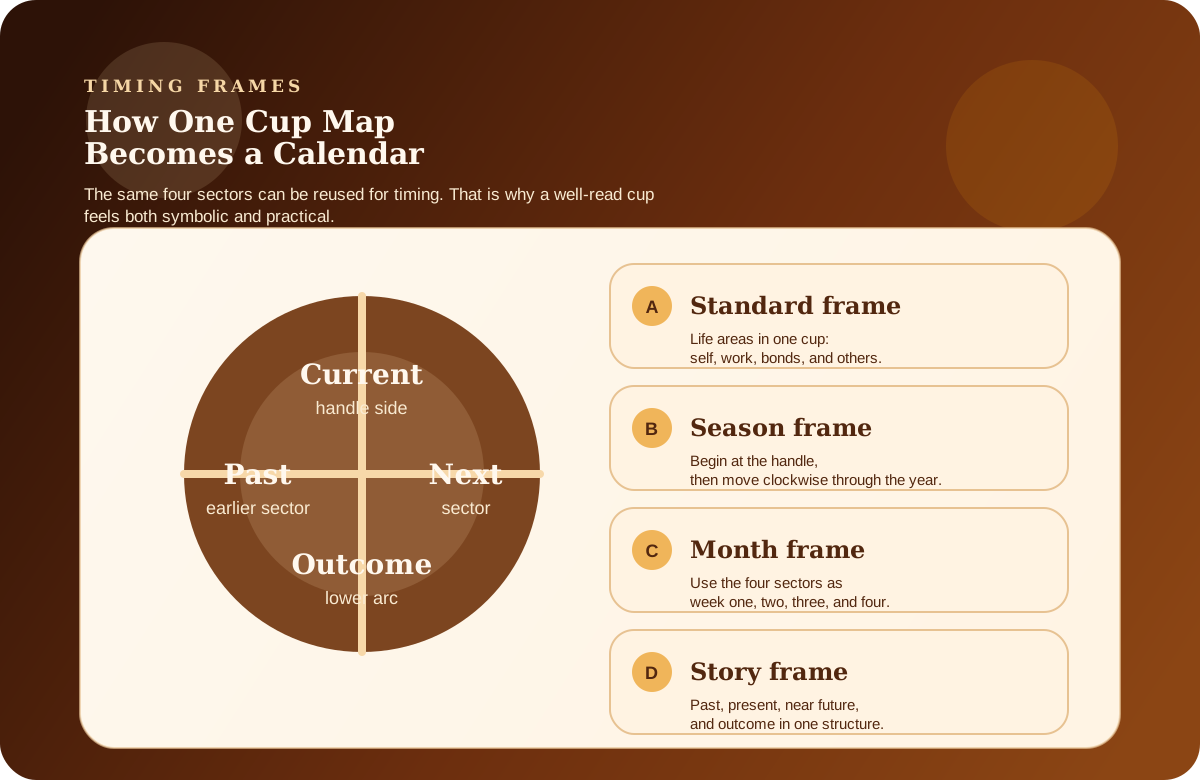
Radchenko's manual also shows how the same four sectors can be reused as a timing device. Read one way, they describe immediate life areas. Read another way, the sector by the handle becomes the current season and the rest move clockwise through the year. Read for a month, the sectors can stand for week one to week four. Read without a time question, the same four positions can become what was, what is, what is coming, and how it ends.

Standard frame: near handle and rim show what is closest, while the bottom stores the emotional core.
Season frame: current season begins at the handle and turns clockwise through the year.
Story frame: the four sectors can also mean past, present, near future, and outcome.
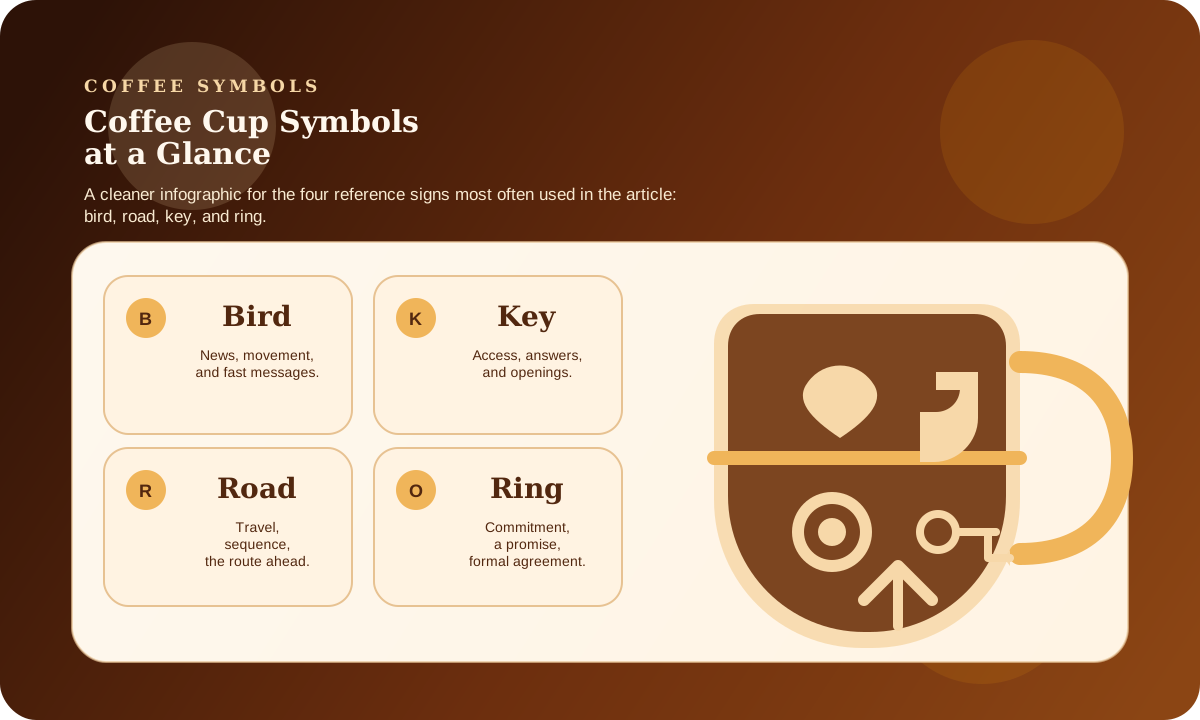
Diagram showing how coffee cup sectors can be reused for timing, seasons, and story structure
The same sector map can describe life areas, seasonal timing, weekly timing, or the story arc of a question.

4. Numbers, Letters, Zodiac Markers

The cup becomes more precise when you notice numbers, initials, and zodiac glyphs

Traditional manuals do not stop at picture-figures. They also pay attention to legible numbers, letters, and astrological signs when those shapes appear clearly enough to be trusted. These marks can make the reading more specific by pointing to a person, a date window, or a concrete type of event.

In Radchenko's system, digits are read more concretely than in modern numerology. A visible 1 can point to love or attraction, 2 to illness or setback, 3 to a purchase or deal, 4 to hope, 5 to conversations or gossip, 6 to marriage or wedding complications, 7 to family happiness, 8 to quarrel, 9 to a new acquaintance, 10 to favorable circumstances, and 100 to long-lasting fortune.

Marker Traditional shorthand What modifies it
Numbers Event-signals such as love, illness, trade, hope, gossip, marriage, quarrel, or a new meeting. Sector changes the life area; size changes force; doubled or reversed forms complicate the theme.
Letters Often read as initials, especially on the side opposite the handle. Nearby figures explain whether the initial points to a lover, colleague, rival, or family member.
Zodiac symbols Can indicate temperament, timing, or the dominant mood of a situation. Near the base they describe core meaning; higher in the cup they can mark a season, month, or sign-related style.
Scale matters: large digits or letters act louder, while smaller ones feel incidental or passing.
Orientation matters: horizontal or reversed marks in older manuals often hint at delay, disguise, or social friction.
Personal references matter: some readers ask for the querent's birth year because a snake, for example, can mean jealousy or simply a Snake-year person.

Zodiac glyphs are especially useful for timing. If a Libra sign appears away from the base, it can point toward the Libra period of the year; if it sits deep near the bottom, it is more likely describing balance, relationship dynamics, or the emotional tone of the matter. That is one reason this site pairs coffee reading with separate numerology and astrology manuals instead of keeping the cup isolated from the wider symbolic system.

5. Symbol Library

A symbol becomes memorable when it enters a scene

Movement and messages

Bird: news, a message, an invitation, or something suddenly in motion. Road or line: passage, movement, sequence, or a route opening up. Ship: distance, exchange, or a journey carrying emotional weight.

Relationships and bonds

Heart: affection, emotional truth, tenderness, or vulnerability. Ring: commitment, agreement, contract, or something becoming official. Dog: loyalty, protection, or the presence of a reliable ally.

Prosperity and openings

Fish: money flow, nourishment, or material opportunity. Key: solution, access, answer, permission, or a door opening. Tree: growth, health, roots, family continuity, and slow strengthening.

Pressure and resistance

Mountain: delay, burden, pressure, or the need for endurance. Snake: caution, entanglement, hidden motives, or emotional complexity. Cloud or blot: confusion, delay, mixed signals, or a detail that has not clarified yet.

The symbol list works best when it stays flexible. A key near the rim feels like an answer arriving soon. A key at the base may point to a slower realization with deep roots. A bird next to a mountain can mean news that arrives carrying a complication. This is why strong readers speak in phrases, not in blunt one-word verdicts.

Chart of common coffee reading symbols
Symbol charts are reference tools. Use them to start the reading, not to flatten it.

6. Extended Symbol Atlas

A deeper symbol shelf, adapted from classic coffee manuals

Once the reader understands the cup structure, a much larger symbol library becomes useful. Radchenko's manual contains hundreds of figures, many of them highly specific. The most helpful way to use that kind of material on a modern site is not to dump an endless list, but to keep a curated shelf of recurring signs and the kind of scenes they usually create.

Openings and movement

Stork: a change of place, a move, a return, or the beginning of family life. In many traditional readings it is treated as an almost uniformly favorable sign.

Ship: long travel, distance, trade, or a journey carrying emotional or practical weight.

Wavy line: travel by water, repeated journeys, or a life period shaped by movement.

Door: a threshold moment, a new phase, or access to a place that was closed before.

Suitcase: a trip, a temporary departure, or a relocation with mixed motives such as work plus pleasure.

Home and social atmosphere

Bouquet: family celebration, a holiday visit, or affectionate ritual around a relationship.

Tea cup or coffee pot: conversation, hosting, and the social tone of a gathering.

Branch with leaves: a renewed contact, a living social network, or someone returning from a distance.

Dog: loyalty, practical support, and the friend who remains steady when the rest of the cup is mixed.

Birds: messages, visitors, conversations, or news moving quickly through a group.

Ambition, luck, and visibility

Angel: protection, grace, or the sense that help arrives before damage becomes permanent.

Tower: rise in status, ambition, hierarchy, and the wish to move upward in public life.

Crown: dignity, pride, authority, or recognition that changes how others respond to the querent.

Book: study, qualification, learning, or the start of a more intellectual chapter.

Anchor: success through steadiness, a safe arrival, or the ability to hold a position against outside pressure.

Pressure, warning, and complication

Shark: risk, danger, or a situation where power is uneven and caution matters.

Snake: emotional coldness, complexity, jealousy, seduction, or a hidden agenda depending on context.

Cross: a burden, sacrifice, sorrow, or a deeply moral trial; the exact tone changes with nearby symbols.

Spider: intrigue, manipulation, or the slow creation of a sticky situation.

Rat: leakage, loss, erosion, or the small but persistent damage that weakens a larger structure.

The book's most useful lesson is not that every symbol has one frozen answer. It is that symbols become vivid when they lean on one another. A tower next to a crown is not just “career” plus “recognition”; it may describe a rise into visible responsibility. A stork beside a ring is not just “move” plus “commitment”; it may suggest the formation of a household or a relationship changing residence.

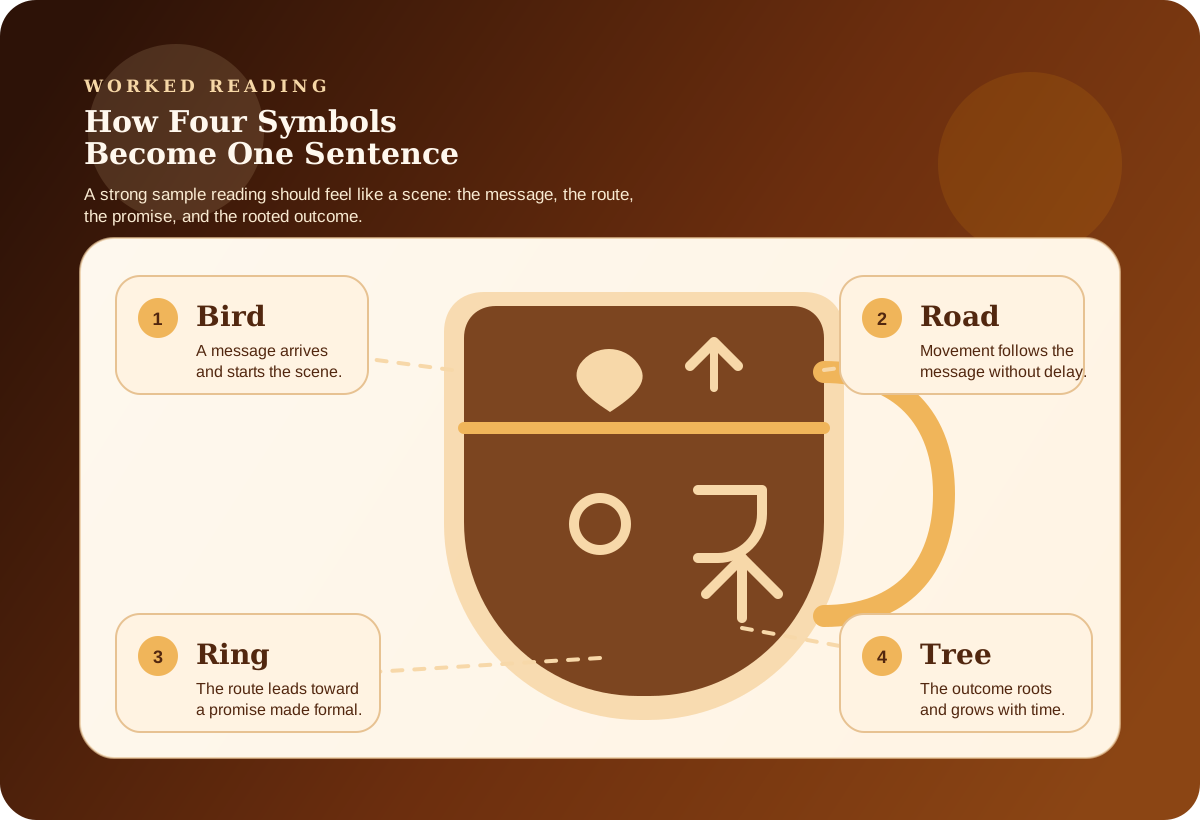
Example coffee cup reading with labeled bird, road, ring, and tree
A sample reading works because the symbols support one another instead of competing.

7. A Full Sample Reading

A believable reading sounds like a short scene, not a list

Imagine a cup where a bird appears near the upper wall, a clean line runs downward through the middle, a ring sits to the right, and a tree appears lower near the base. Read literally, those are four separate nouns. Read properly, they arrive like beats in a scene.

The bird suggests a message, invitation, or fast-moving update. The line or road says that the update leads to movement, travel, or a transition from one state to another. The ring introduces commitment, agreement, or a formal bond. The tree at the base says that whatever begins here has the strength to root itself and grow rather than vanish immediately.

Put together, the cup might be read this way: a message starts a process; the process is tied to a relationship, promise, or agreement; and if handled with patience, the matter has enough life in it to become stable over time. That is the difference between a symbol inventory and a reading that feels alive on the page.

8. How To Keep The Reading Useful

The richest readings stay precise, open, and humane

Coffee reading becomes shallow when every sign is treated like a fixed answer. It becomes much richer when it is treated like a symbolic conversation: what is rising, what is close, what is delayed, what belongs to the querent, and what is coming from outside their reach.

That is why older manuals still matter. They preserve a vocabulary. But live practice matters just as much. Real readers soften the vocabulary with context, tone, and pattern. They do not force certainty where the cup remains ambiguous. They read for shape, sequence, and human relevance.

The best use of a structured manual is not to become rigid. It is to become clearer. The rules for sectors, time frames, numbers, letters, and zodiac markers give the reader a dependable skeleton; intuition turns that skeleton into a reading that actually sounds human.

Coffee reading is a symbolic tradition for reflection and entertainment, not a substitute for legal, medical, or financial advice.

Continue In CoffeeTells

Want this ritual turned into an instant reading?

CoffeeTells turns the slow manual method into a guided flow: upload the cup, get an instant interpretation, and continue into numerology and astrology without juggling notes, charts, and symbol lists by hand.

Try CoffeeTells for Your Cup