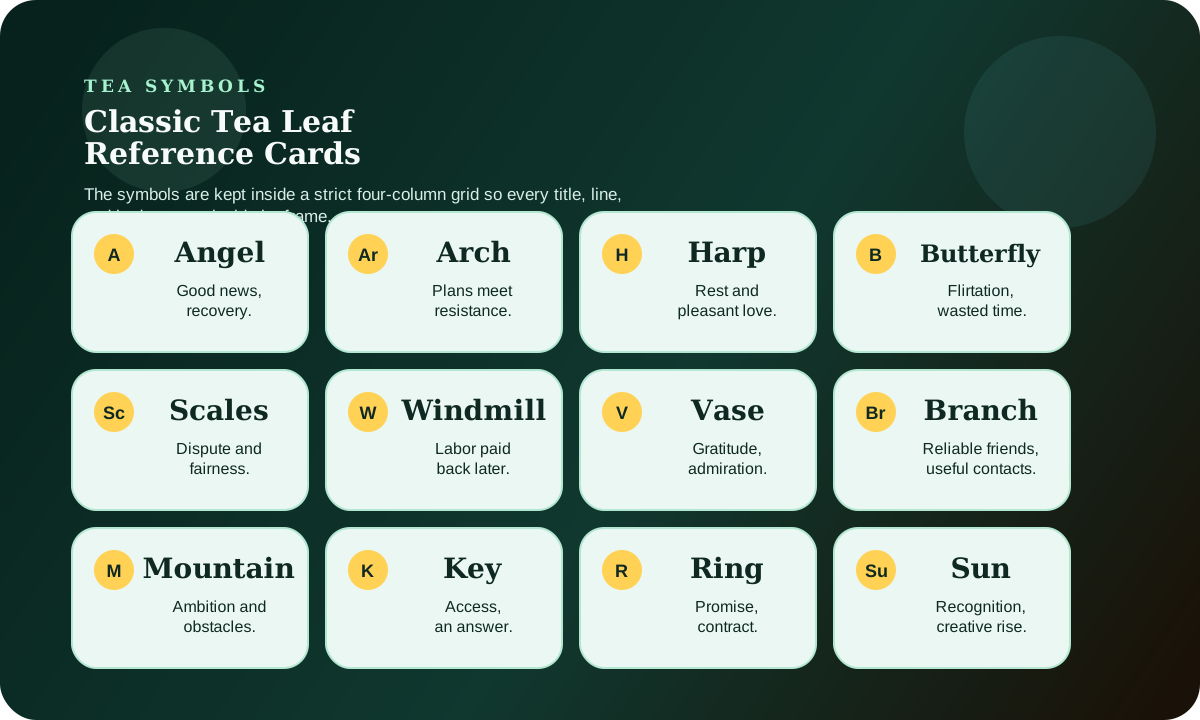
Angel
Pleasant news connected with relatives, release from danger, or recovery after a period of strain.
Tea reading is quieter than coffee reading, yet in some ways even more dramatic. The leaves float, gather, separate, and cling. The future does not appear as a heavy sediment alone; it flickers first on the surface.
This guide adapts the Chinese-style tea method described by T. A. Radchenko in Fortune Telling on Coffee and Tea (2007): loose tea brewed directly in the cup, a focused question, five circles away from yourself, then a careful reading of floating leaves, cup walls, and the story they form together.
Infusion
The ritual begins with loose leaves, quiet focus, and one deliberate question.
Surface
In tea reading, what floats and where it floats matters almost as much as the symbols.
Story
A convincing cup sounds like a short chapter, not like a scattered glossary.
1. What Tea Reading Is
Tea-leaf reading belongs to the same symbolic family as coffee reading, yet the feeling is different from the start. Coffee settles into darker, thicker traces on porcelain. Tea remains lighter and more mobile. It floats, spreads, clings, and returns to the surface. Because of that, the reading often feels less like excavation and more like observation.
In the Chinese-style cup method summarized by Radchenko, the reader does not need a special table, elaborate tools, or a theatrical setup. The art begins with an ordinary cup of loose-leaf tea and the decision to pay very close attention to what remains after drinking. The simplicity is part of the method's appeal. It invites slowness, not spectacle.
The real skill lies in seeing whether the cup feels calm or turbulent, open or obstructed, generous or anxious. Only after that do the shapes matter: an angel, a ring, a star, a road, a bottle, a mountain, a windmill. The symbols are the nouns of the reading, but the arrangement of the leaves gives you the sentence.
Tea reading begins not when the cup is empty, but when the remaining leaves start organizing the question back to you.
2. Brewing And Focusing The Cup
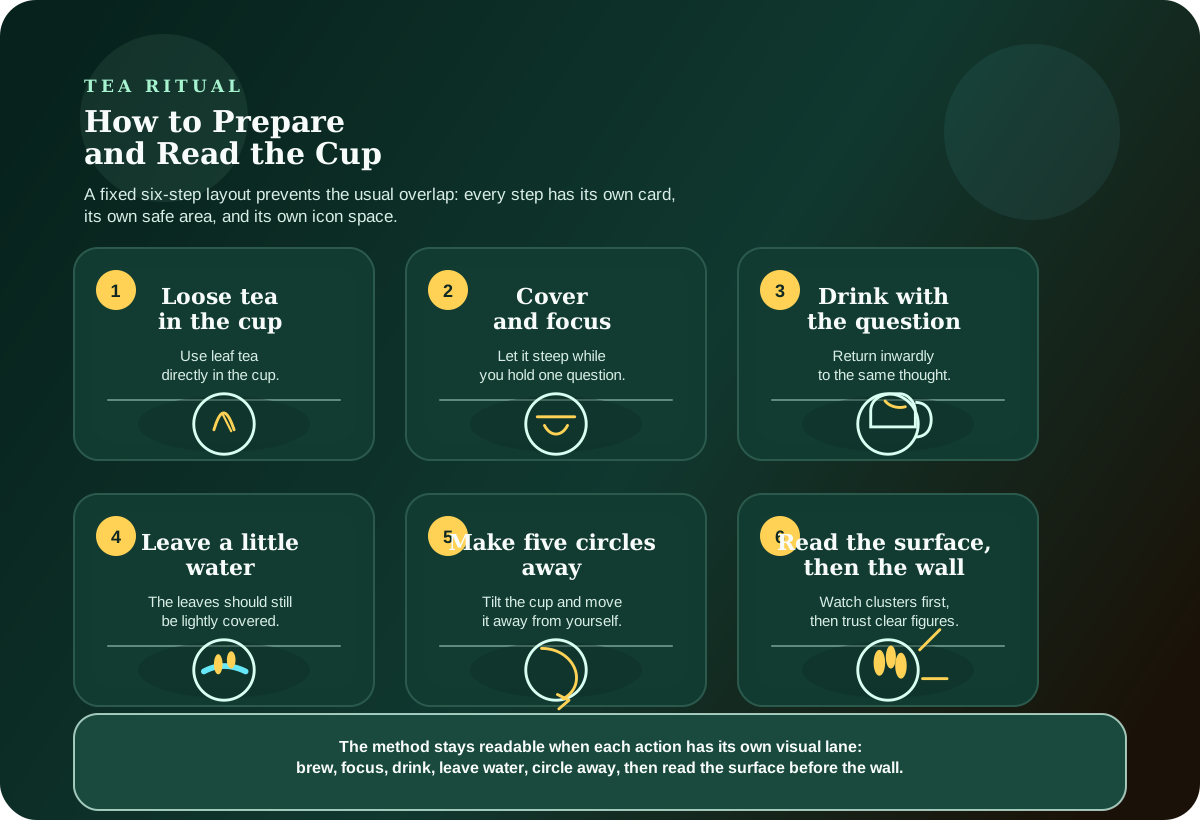
Radchenko's tea chapter is unusually practical. The tea is brewed directly in the cup: one teaspoon of loose leaf tea per cup, stirred, covered with a saucer, and left to steep for several minutes. While the tea infuses, the reader is advised to step away from secondary worries and keep attention on the one question that actually matters.
That last motion matters. Tea reading is not just about static shapes on porcelain; it is also about how the leaves respond to directed movement. The cup has been asked a question, given time to settle, then gently set in motion. What remains is the response.
3. Surface Signs And Floating Leaves
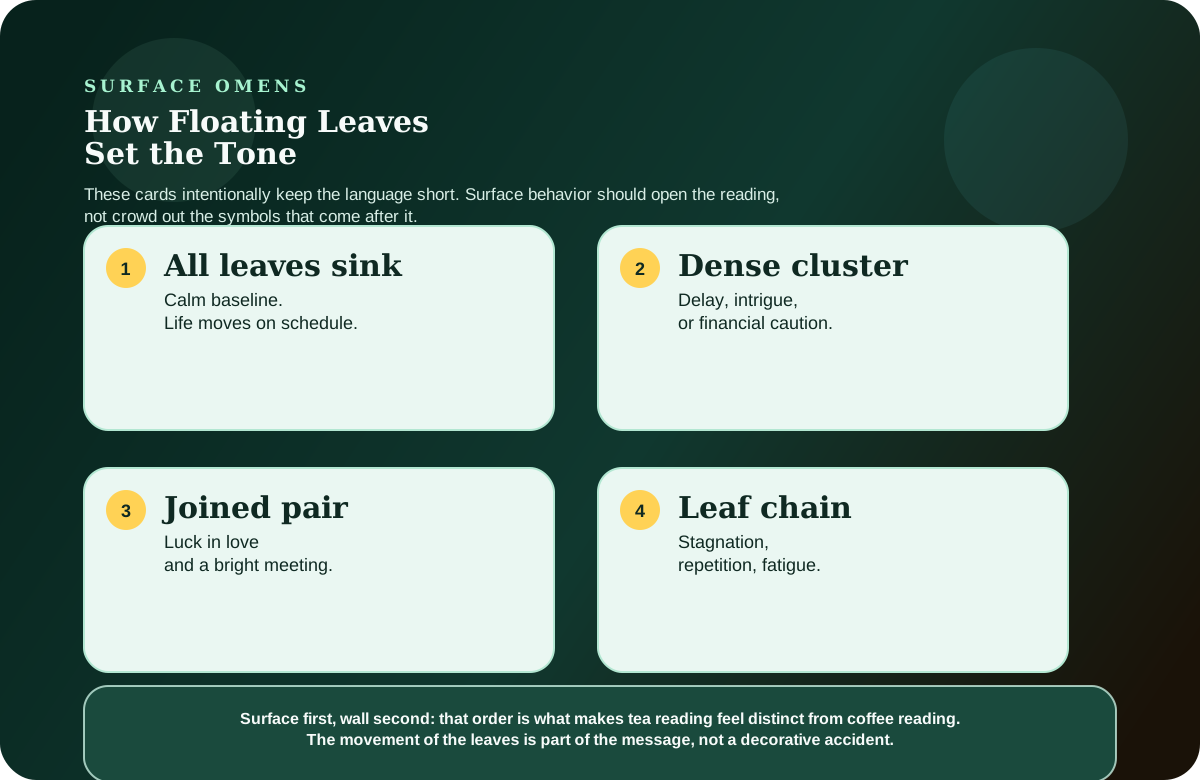
One of the strongest parts of the tea chapter is its attention to leaf behavior before the symbolic glossary even begins. Radchenko treats floating leaves, clusters, and leaf-pairs as meaningful in their own right. That makes sense: tea remains alive in the cup longer than coffee does, so movement and grouping become part of the message.
| Surface pattern | How the manual reads it |
|---|---|
| All leaves sink | Life proceeds normally, plans unfold on schedule, and nothing major is fighting the natural order of events. |
| Many leaves remain on the surface | Happiness or ease is delayed. A heavy cluster near the handle points to work pressure; opposite the handle it points to dissatisfaction in love; in the center it warns about debt. |
| Dense floating mass | A warning against dubious schemes, manipulation, or financial loss through poor judgment. |
| Two or three leaves floating freely | A good sign of trust, support, and easier cooperation with friends, lovers, colleagues, or superiors. |
| Two elongated leaves joined at the tips | Luck in love, a joyful new meeting, or a connection that quickly becomes emotionally bright. |
| Three joined leaves | Personal motives may begin to distract you from duties, practical tasks, or work that still needs attention. |
| Leaves linked in a chain | Loss of confidence, creative stagnation, or a feeling that the spirit of the matter has become tired. |
| Leaves clinging to different edges | Loss of initiative, worsening finances, or energy scattered in too many directions at once. |
4. Tea And Coffee Compared
Tea and coffee readings belong together, but they do not speak in quite the same accent. Tea often begins with motion, atmosphere, and social temperature. Coffee often begins with placement, weight, and the architecture of the cup wall. Understanding that difference helps a reader choose the right symbolic tool for the kind of question being asked.
| Reading layer | Tea-leaf reading | Coffee-cup reading |
|---|---|---|
| Texture | Light, drifting, relational, and sensitive to movement on the surface. | Dense, rooted, and strongly shaped by where the grounds settle on the wall and base. |
| First thing to notice | Whether the leaves float, cluster, join, or sink. | Whether the cup feels open or crowded, and where the strongest shapes appear. |
| Best for | Atmosphere, relationships, social movement, and emotional weather. | Timing, rooted motives, personal sectors, and the stronger structure of a question. |
| Key skill | Watching motion, clusters, and delicate figure-making. | Reading zones, depth, direction, and the relation between nearby symbols. |
| Natural companion | A softer interpretive voice, tuned to changing social or emotional conditions. | A more architectural voice, tuned to sequence, pressure, and outcome. |
If you want the thicker wall-and-sector logic, the coffee cup reading manual is the better starting point. If you want a lighter, more atmospheric cup that still says a great deal through pattern and symbol, tea gives you a remarkably elegant method.
5. Symbol Library
The tea chapter in Radchenko's book offers a long catalog of figures. The most readable way to preserve that material online is not to dump an endless list, but to keep the most recognizable symbols in clear English and let them sound like real scenes rather than mechanical dictionary entries.
For a broader historical reference, browse the tea leaf symbol archive at Tasseography.org, with source notes and cup-position guidance.
Pleasant news connected with relatives, release from danger, or recovery after a period of strain.
Difficulties carrying plans through, slower career growth, or a minor physical setback.
A good rest, enjoyable time away from pressure, and for younger readers, favorable love matters.
Frivolity, wasted time, flirtation, and near the handle, possible infidelity or divided attention.
A disputed matter or legal question. Balanced scales favor fairness; tipped scales warn of bias.
Hard work that pays off later rather than immediately. Effort is not lost; it is delayed.
Gratitude for timely help. A vase with flowers deepens the tone into admiration and appreciation.
Reliable friends, healthy connections, and helpful contacts gained through work or practical circles.
High ambitions paired with real obstacles. The desire is large, but so is the climb.
New opportunities, a literal answer, or access to something previously closed. Near a house, it can imply property matters.
New acquaintance, engagement, proposal, marriage, or a contract becoming official and binding.
Recognition, wealth, creative ascent, victory, and a period when your contribution is finally seen.
The enduring strength of these symbols is their concreteness. A butterfly is not vague. A key is not vague. A tipped pair of scales is not vague. The symbol becomes powerful because it gives the mind a definite image and then lets the rest of the cup explain that image.
6. Extended Tea Atlas
Below is a more generous atlas adapted from the tea chapter: not every figure in the book, but enough to give the page the feeling of a real manual rather than a minimal summary. Read the groups slowly. The point is not to memorize everything at once. The point is to notice recurring families of meaning.
House: stability, reliability, confidence, family life, and a settled base; a weak house can point to domestic quarrels.
Teapot: domestic wellbeing and the pleasure of guests entering the home.
Heart: love, friendship, and the birth of a new feeling.
Flower: heartfelt wishes coming true, especially in affection and emotional life.
Apple: a hidden bond, a secret tie, or a relationship that prefers privacy.
Road: travel, departure, and movement that becomes unavoidable.
Ship: advancement, worthy career progress, and sometimes temporary relocation near the handle.
Airplane: sudden trip and steep change in life circumstances.
Arrow: the right direction revealed by circumstances or by the advice of competent people.
Chair: stable position, secure career footing, and the ability to hold your place.
Star: a shining hour, hopes fulfilled, and near the handle, a reminder that visibility can also attract envy.
Umbrella: protection from outside circumstances; the wider the umbrella, the stronger the protection.
Horseshoe: fortunate chance and the kind of luck that arrives just in time.
Anchor: harmony in personal life and luck in career, a notably favorable sign.
Dog: dependable friends, faithful colleagues, and long-term partnership.
Bottle: separation, and if it lies sideways, digestive or bodily discomfort.
Drum: conflict and disputes; surrounded by dots, the conflict becomes gossip and rumor.
Volcano: emotional overheating, a charged atmosphere, and pressure close to eruption.
Snake: intrigue, duplicity, envy, and the need to keep plans private.
Clouds: illusions, problems, and if dots are nearby, material difficulty as well.
The tea chapter also adds a layer of digits and letters. A clear 1 calls for decisiveness; a 3 supports useful cooperation; a 5 brings needed information; a 7 supports family harmony; a 9 points to a fortunate meeting. Letters near the handle are often treated as initials. For the broader number system behind those motifs, see the numerology manual.
7. A Full Sample Reading
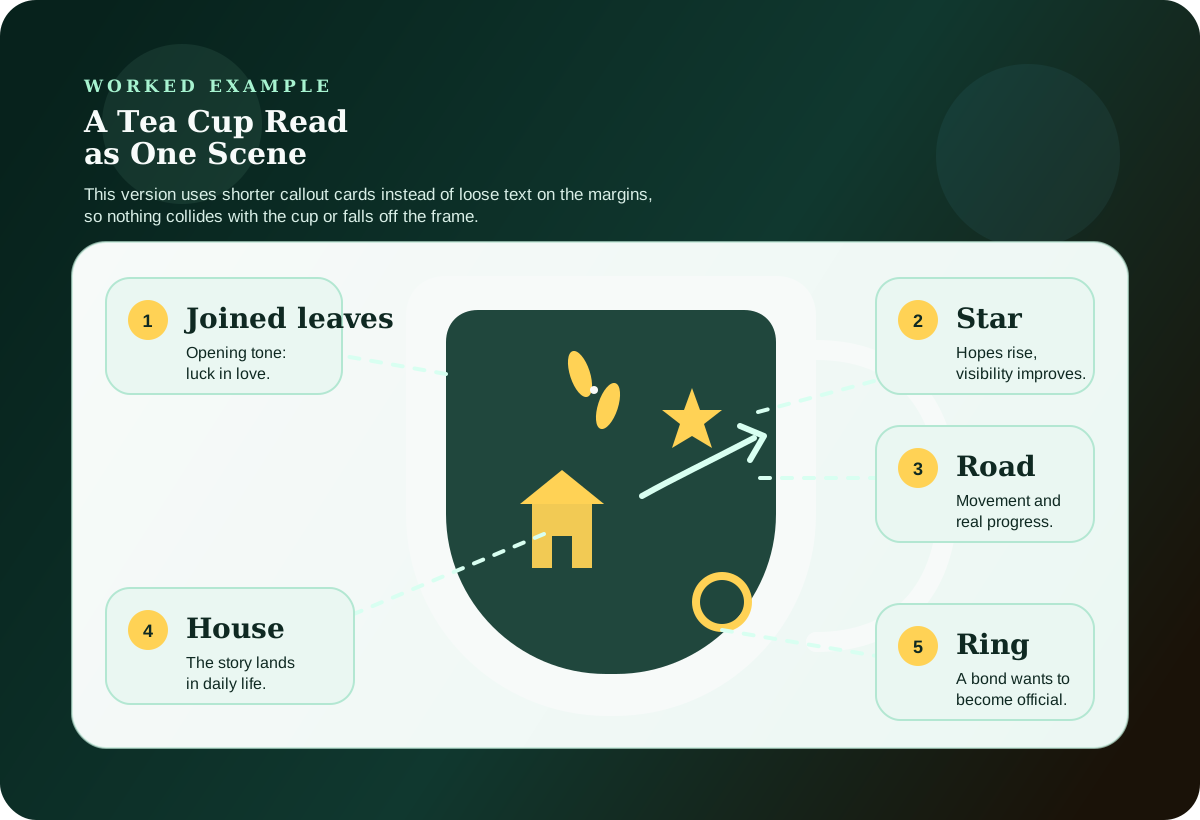
Imagine a cup where two long leaves meet on the surface, a star appears near the upper wall, a clear road descends toward the handle side, a small house settles there, and a ring sits lower in the cup. Read as separate nouns, the cup is interesting. Read as a scene, it becomes persuasive.
The joined pair on the surface opens the reading with luck in love or the promise of a meaningful meeting. The star near the upper wall brightens the tone: hopes rise, the person's visibility improves, or a long-awaited chance finally begins to show itself. The road says that this does not remain abstract; something actually moves. The house by the handle pulls the theme toward home life, private security, or the place where daily life is lived. The ring lower in the cup gives the story gravity. A connection, agreement, or promise wants to become formal.
Put together, the cup might be read this way: an emotionally promising encounter or reconciliation moves quickly from possibility into lived reality, and if handled well it has the strength to become official. If a bottle or a chain of leaves interrupted that same scene, the reader would soften the verdict and speak instead of distance, delay, or competing obligations.
8. How To Keep The Guide Useful
What older manuals preserve so well is vocabulary: the ring, the star, the bottle, the road, the umbrella, the windmill, the arch. What live reading adds is proportion. Not every sign needs the same weight. A clear symbol near a meaningful cluster matters more than a doubtful stain that only vaguely resembles something.
That is why the reading order matters so much. First the overall weather of the cup. Then the surface behavior of the leaves. Then the strongest figures. Then the relation between those figures. In that order, tea reading stops sounding superstitious and starts sounding like attentive symbolic language.
The point of a guide like this is not to trap the reader inside fixed answers. It is to give enough structure that intuition becomes disciplined, and enough atmosphere that the reading still feels alive. Used that way, tea leaves can say a surprising amount with very little material.
Tea reading is a symbolic tradition for reflection and entertainment, not a substitute for legal, medical, or financial advice.
Continue In CoffeeTells
CoffeeTells keeps cup symbolism, numerology, and astrology in one readable flow, so you can move from an image to an interpretation without juggling manuals, scattered notes, and multiple tools by hand.
Try CoffeeTells for a Faster Reading